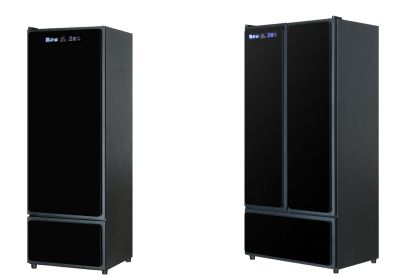
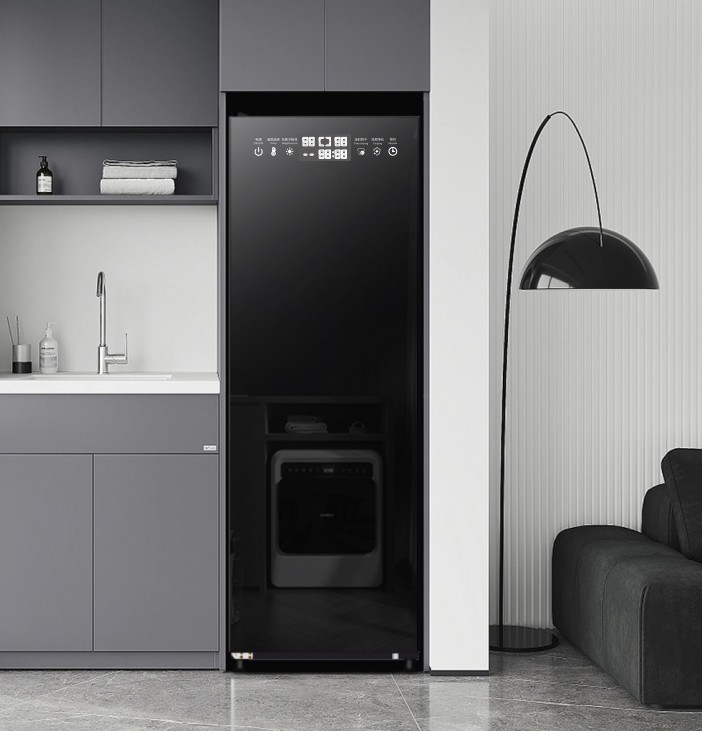
YTD400-HL 400L Classic Rapid Sterilization Drying Cabinet | UV+Ozone Disinfection, Single-Engine 1420W
400L classic rapid sterilization drying cabinet with single-engine 1420W convection, UV-C+Ozone+Pasteur triple disinfection, and multi-temp control. Reliable workhorse for clinics, salons, and small-scale commercial laundry.
Product Overview
Not every sterilization-and-drying application requires dual-engine power or 1000+ liters of capacity. For the dental clinic sterilizing operatory towels between patient appointments, the senior care home processing a manageable daily load of resident garments, or the veterinary practice drying and disinfecting post-surgical drapes, the value proposition is different: reliability, simplicity, predictable cycle times, and a capital cost that aligns with a single-site, moderate-throughput operation. The Legia Smart YTD400-HL was designed for exactly this buyer — a no-compromise sterilization platform in a right-sized, single-engine 400-liter format that does not ask the customer to pay for capacity or wattage they will never utilize.
The YTD400-HL’s 1420-watt single top-drive convection blower is a deliberate design choice, not a cost-reduced compromise. In a 400-liter chamber — which accommodates 8-12 hanging garments or 1-2 bedding sets — a single well-designed centrifugal blower positioned at the top of the cabinet generates sufficient airflow velocity and distribution uniformity to achieve even drying across all hanging positions, as verified by multi-point thermocouple mapping during development. The absence of a second motor eliminates not only its direct power draw (typically 80-120W for a comparable blower) but also the control-board complexity, relay count, and potential failure mode associated with synchronizing two independent fan circuits.
For B2B buyers managing multiple small facilities — a dental group with five clinic locations, a salon chain with branches across a metropolitan area, or a care-home network with distributed laundry operations — the YTD400-HL’s combination of clinical-grade sterilization, proven single-engine reliability, and accessible price point makes it the logical standardized-appliance choice. One model to train staff on, one set of spare parts to inventory, one service protocol to manage.
Advanced Sterilization & Drying Technology
The YTD400-HL employs the same triple-barrier sterilization architecture as Legia Smart’s flagship models, repackaged for the 400L form factor without de-contenting any of the three disinfection modalities.
UV-C Germicidal Irradiation: A 10-watt low-pressure mercury-vapor lamp, emitting at the 253.7nm germicidal peak, is positioned along the chamber’s rear wall such that its radiation pattern covers the full garment-hanging zone. The lamp’s quartz envelope transmits approximately 90% of the generated UV-C flux (compared to ~65% for standard soda-lime glass sleeves), maximizing the photon flux incident on textile surfaces. At the YTD400-HL’s lamp-to-garment distance of approximately 15-25 cm (depending on garment thickness and hanging position), the UV-C intensity of approximately 80-120 μW/cm² achieves a 3-log (99.9%) reduction of E. coli, S. aureus, and P. aeruginosa within 5-10 minutes of exposure — consistent with the UV dose-response curves published in the clinical disinfection literature.
Ozone Oxidation: A compact corona-discharge module, driven by a high-frequency solid-state inverter rather than a line-frequency iron-core transformer, generates ozone with lower electrical losses and more stable output than older transformer-based designs. The solid-state driver also enables the control firmware to modulate ozone output — rather than simple on/off cycling — which is particularly relevant in the 400L chamber where excessive ozone concentration could extend the post-cycle decomposition phase unnecessarily. The YTD400-HL’s algorithm targets a peak chamber concentration of 2-4 ppm O₃, verified by electrochemical sensor feedback during development, achieving effective textile penetration without overshooting.
Pasteur Thermal Phase: Following UV-C and ozone exposure, the chamber transitions to a sustained 60-70°C dwell phase. At these temperatures — below the denaturation threshold of most synthetic textile fibers but above the thermal-death threshold for vegetative bacterial cells — any microorganisms that survived UV-C irradiation (due to shading or biofilm protection) and ozone exposure (due to insufficient contact time in dense fabric sections) are inactivated by sustained thermal stress. The three barriers are complementary, not redundant: each addresses a different pathogen-reservoir category, and their combined probability of survival for a given organism is the product of their individual failure probabilities.
The single top-drive fan architecture warrants a specific engineering note. A common misconception equates “dual-engine” with “better” as a universal proposition. In fluid dynamics terms, what matters is not the number of fans but the Reynolds number of the flow regime within the chamber — a dimensionless parameter that characterizes whether airflow is laminar or turbulent. The YTD400-HL’s single fan, driving air through a carefully designed diffuser plenum that distributes flow across the full chamber cross-section, achieves a Reynolds number well into the turbulent regime (Re > 4000) at all hanging positions — meaning the airflow is chaotic enough to break up the boundary layer of humid air that clings to fabric surfaces, which is the rate-limiting step in the drying process. Adding a second fan to a 400L chamber would increase turbulence intensity marginally but would not materially improve drying rate — while adding cost, power draw, and a failure point.
Core Advantages
- 1420W Single-Engine Design — Why It Matters: For the 400L chamber volume, a single 1420W top-drive blower is the engineering “sweet spot” — sufficient to achieve turbulent flow throughout the chamber (verified by CFD modeling), without the incremental cost, control complexity, and dual-motor synchronization logic that a dual-engine design would require. Buyers are not paying for a second motor whose marginal performance contribution in this chamber size would be negligible.
- Clinical-Grade Triple Sterilization Without Chemical Consumables — Why It Matters: In a dental clinic or veterinary practice, purchasing, storing, and disposing of liquid chemical sterilants (glutaraldehyde, hydrogen peroxide, peracetic acid) involves a cascade of hidden costs: inventory management, staff training for safe handling, PPE consumption, hazardous-waste disposal contracts, and regulatory paperwork. The YTD400-HL’s UV-C + Ozone + Pasteur protocol eliminates every one of these cost lines, replacing them with electricity and ambient air. The total cost of ownership advantage over a 5-year asset lifecycle is substantial compared to chemical-dependent alternatives.
- 400L Right-Sized Capacity — Why It Matters: A 650L or 800L cabinet in a 3-operatory dental clinic does not dry clothes faster — it simply occupies more floor space (which in a clinical environment is charged at rent per square foot), consumes more electricity per cycle (because a larger air volume must be heated to sterilization temperature), and costs more to purchase. The YTD400-HL’s 400L chamber aligns with the daily textile throughput of the small-to-medium clinical practice, salon, or care facility — full utilization with zero wasted capacity.
- Solid-State Ozone Inverter Driver — Why It Matters: Transformer-based ozone generator drivers, the legacy technology still found in many competing cabinets, degrade in two ways over time: the iron-core transformer windings develop inter-turn shorts from thermal cycling, reducing output voltage; and the corona-discharge electrode gap widens from sputter erosion, increasing the voltage required to initiate corona. Either failure mode results in declining ozone output — invisible to the operator, who has no means of verifying that “sterilization” is actually occurring. The YTD400-HL’s solid-state inverter maintains stable output voltage across its operating life, and its electrode assembly is field-replaceable as a cartridge — a 5-minute maintenance procedure that restores ozone output to factory specification.
- Proven Single-Engine Reliability — Why It Matters: For a multi-site operator standardizing on one cabinet model across 10, 20, or 50 locations, the dominant cost is not purchase price — it is unscheduled maintenance. Every additional motor, relay, sensor, and wiring harness is a potential field-failure point that triggers a service call. The YTD400-HL’s single-engine architecture has fewer components to fail, fewer failure-mode interactions to troubleshoot, and a longer mean time between service events — a reliability advantage that compounds across a fleet deployment.
Ideal Application Scenarios
Multi-Site Dental Group Practices: Standardize on the YTD400-HL across all clinic locations. Each practice processes its own operatory towels, patient bibs, and staff uniforms on-site with documented triple-barrier sterilization, eliminating the cross-contamination risk and turnaround delay of centralized laundry services. The 400L capacity matches the daily textile throughput of a 3-6 chair dental practice without over-specifying, and the standardized model means one spare-parts inventory and one training protocol across the entire group.
Veterinary Clinics & Animal Hospitals: Post-surgical drapes, kennel bedding, and staff scrubs exposed to zoonotic pathogens require sterilization that is both effective and compatible with frequent cycling. The YTD400-HL’s ozone penetration capability addresses the particular challenge of animal hair-embedded textiles, where dense fur can shield microorganisms from surface-only UV exposure. The chemical-free sterilization also eliminates the risk of residual disinfectant causing dermal reactions in animals with compromised skin barriers.
Beauty & Aesthetic Clinics: Salon towels, headrest covers, esthetician uniforms, and reusable treatment-room linens accumulate a complex mixture of cosmetic-product residues, skin oils, and potential pathogens (S. aureus, P. aeruginosa, dermatophyte fungi) across client appointments. The YTD400-HL’s 400L chamber processes a full day’s textile throughput from a 4-6 chair salon, and the cycle-completion indicator provides visible hygiene assurance that can be incorporated into the clinic’s client-facing sanitation narrative.
Small Independent Pharmacies & Compounding Labs: For pharmacies preparing sterile compounded preparations under USP <797> guidelines, the YTD400-HL provides a validated drying and low-bioburden storage environment for cleanroom garments and reusable PPE. The ozone-decomposition phase ensures that garments retrieved from the cabinet have zero residual oxidant, eliminating a potential chemical-interaction variable in the compounding environment.
Technical Specifications
| Parameter | Specification |
|---|---|
| Product Model | YTD400-HL |
| Type | Single-engine top-drive convection |
| Capacity | 400L ± 20L |
| Voltage / Frequency | 220V / 50Hz |
| Rated Power | 1420W |
| Drying Temperature | 45°C / 50°C / 55°C / 60°C / 65°C / 70°C (6-level selectable) |
| Dimensions (W×D×H) | 55 × 53 × 163 cm |
| Net Weight | 26 kg |
| Gross Weight | 30 kg |
| Door Material | Tempered glass (UV-filtering, heat-resistant) |
| Body Material | High-quality baked paint steel |
| UV Lamp | Dominant wavelength 200–280nm, Power 10W, quartz envelope |
| Sterilization Method | UV-C (253.7nm) + Ozone (solid-state inverter-driven) + Pasteur (medium-low temperature) |
| Ozone Generator | Corona-discharge, solid-state high-frequency inverter, field-replaceable electrode cartridge |
| Heater Type | IPX1 waterproof PTC ceramic (self-regulating) |
| Fan Type | Top-drive centrifugal blower with diffuser plenum |
| Airflow Regime | Turbulent (Re > 4000) throughout garment-hanging zone |
| Recommended Load | 8–12 garments or 1–2 bedding sets |
| Control Panel | Touch-screen: Auto (Dry + Sterilize), Dry, Sterilize, Temp Select, Appointment |
| Safety Features | Door interlock (UV/ozone cut-off), PTC inherent self-limiting, over-temp auto cutoff, grounded 3-prong plug |
| Executive Standards | GB4706.1-2005, GB4706.6-2008 |
Frequently Asked Questions
What is the price of the YTD400-HL 400L Classic Rapid Sterilization Drying Cabinet | UV+Ozone Disinfection, Single-Engine 1420W?
Legia Smart disinfection equipment typically ranges from USD 50 to 200 depending on capacity, features, and customization. The YTD400-HL starts around USD 130. Request a quote for an exact price based on your order volume and configuration.
Do you offer OEM and ODM customization?
Yes. We provide full OEM/ODM services including custom branding, logo printing, packaging, and feature configuration. Our engineering team can adapt the cabinet capacity, sterilization modes, and control panel to your specifications.
What is the minimum order quantity (MOQ)?
MOQ is flexible and depends on the model and customization level. Sample orders are welcome for evaluation. Contact our sales team with your requirements for a tailored MOQ and lead time.
What certifications do your disinfection products carry?
Our equipment is manufactured to ISO and CE quality standards, with full documentation available for export. Compliance reports and test certificates can be provided on request.
What is the lead time and shipping options?
Standard lead time is 15 to 30 days for production, depending on order size and customization. We ship globally by sea or air with complete export documentation and support EXW, FOB, and CIF terms.
What warranty and after-sales support do you provide?
We offer a 12-month warranty against manufacturing defects, backed by remote technical support, spare-parts supply, and installation guidance to keep your equipment running reliably.
Garment Care Cabinets
Related Products
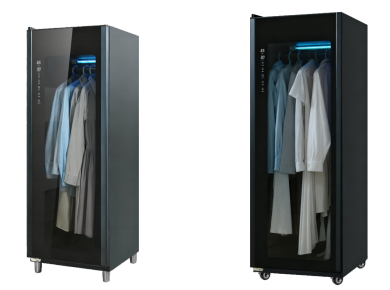
OK389-WT 389L Large Energy-Saving Drying Cabinet | Stainless Steel, 1820W, Multi-Temp 45-70°C
View specifications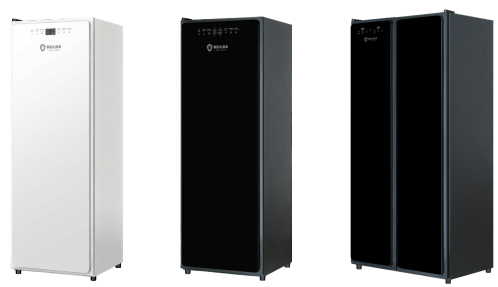
YTD650-HSL 650L Medical Sterilization Drying Cabinet | UV+Ozone Disinfection, Dual-Engine 2620W, Black Tempered Glass
View specifications
GBY800 Series 800L Steam Care Drying Cabinet | High-Temp Steam + Hot Air Circulation, Dual-Engine 2650W, Deep Fiber Care
View specifications
GY1045 Series 1045L Heavy-Duty Industrial Drying Cabinet | Commercial Baking Master, Dual-Engine 3220W
View specifications